
Mars Rock Secret | Perseverance's Shock Find!
Okay, so Mars Rover Perseverance stumbled upon a weird rock. Big deal, right? Wrong! Here’s the thing: this isn’t just another rock. It’s a potential clue – a breadcrumb dropped by the Red Planet itself that could lead to rewriting everything we thought we knew about Martian geology and, dare I say it, the possibility of past life. So, grab your chai, settle in, and let’s unpack why this unusual rock is sending ripples of excitement through the scientific community.
Why This Martian Rock Matters
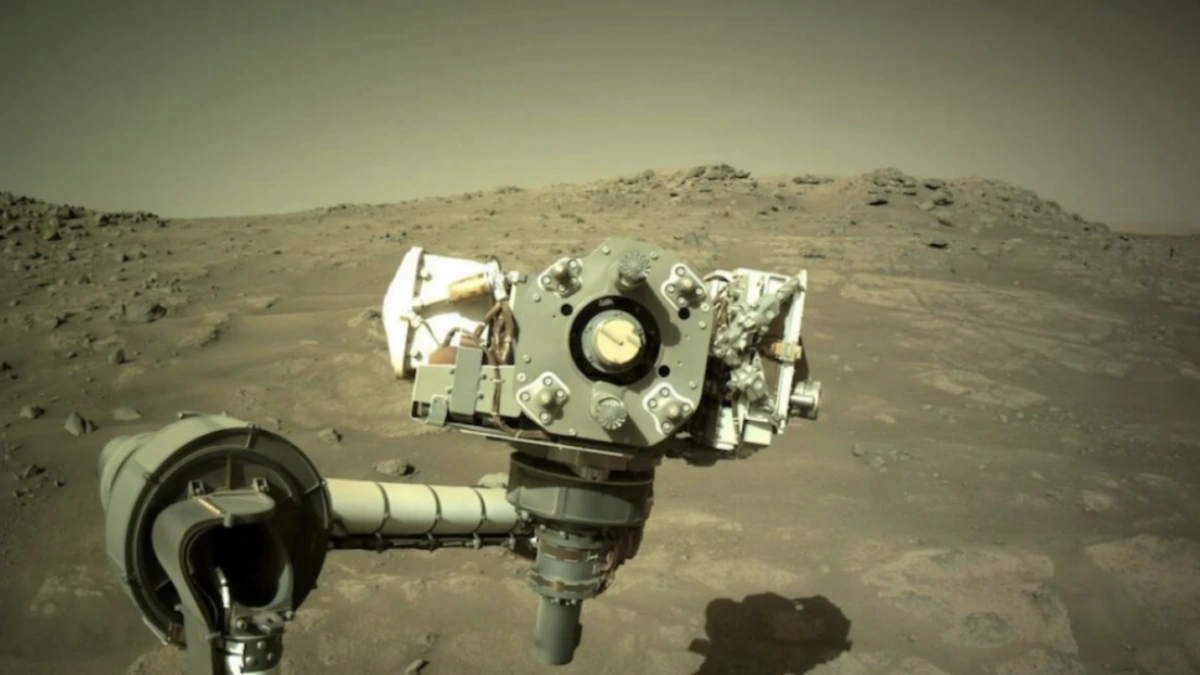
Let’s be honest, Mars is pretty rocky. But not all rocks are created equal. This particular rock, spotted in the Jezero Crater (which, by the way, was once a lake – more on that later), has a peculiar composition and texture that’s got scientists scratching their heads. According to initial reports, it doesn’t quite match the surrounding geology. This is crucial because it suggests the rock might have come from somewhere else – maybe even deep underground, brought to the surface by some ancient volcanic event. This is where the fun begins.
The implications? Well, if this rock originated from a different location, it could offer a snapshot of a completely different geological era or even a unique environment on Mars. And, as we all know, different environments mean different possibilities for the evolution of life. We need to consider the geological context of the discovery, which is key to unlocking its secrets.
Decoding the Rock’s Secrets
So, how do scientists even begin to analyze a rock that’s millions of miles away? Perseverance is equipped with a suite of high-tech instruments, including lasers and spectrometers, that can analyze the rock’s chemical composition without even touching it. It’s like having a portable lab on wheels! But that’s not all. The rover can also collect samples of the rock and store them in special tubes for a future mission to retrieve and bring back to Earth. Imagine the level of analysis we can perform then! Think about it: we’re on the cusp of understanding the rock composition and the processes that shaped it.
And here’s something else to think about: the Jezero Crater. This wasn’t just any old crater; it was once a lake. A lake! That means it had water, and where there’s water, there’s potential for life. This location is not random. The scientists chose it carefully so that Perseverance’s mission objectives can align with finding past life signs.
The Hunt for Extraterrestrial Life
Let’s be clear: Perseverance isn’t going to find little green men. What it is looking for are biosignatures – chemical or physical signs that could indicate past microbial life. These could be anything from fossilized microbes to specific organic molecules. And this unusual rock? It could be hiding exactly those kinds of clues. This connects to the bigger picture: the astrobiological context.
But, it’s not that simple. Even if Perseverance finds a biosignature, it won’t be proof positive of life. There are other explanations for how organic molecules could form on Mars, such as through non-biological chemical reactions. That’s where the complexity – and the excitement – lies. The scientific community has been conducting astrobiology research for decades now.
How India is Contributing
While Perseverance is a NASA project, India is playing a role in the larger Mars exploration story. The Indian Space Research Organisation (ISRO) has its own Mars Orbiter Mission (Mangalyaan), which has been providing valuable data about the Martian atmosphere and surface. While Mangalyaan doesn’t directly analyze rocks, its data helps provide a broader context for understanding the Martian environment and identifying potential areas of interest for future missions.
Furthermore, Indian scientists are involved in analyzing data from missions like Perseverance. Their expertise in geology, chemistry, and biology is invaluable in interpreting the findings and piecing together the puzzle of Mars’ past. What fascinates me is that there is a lot of scope for international collaboration in space exploration.
What’s Next for Perseverance?
Perseverance’s mission is far from over. It will continue to explore the Jezero Crater, collecting more samples and analyzing the surrounding terrain. The plan is to eventually deposit these samples at a designated location, where a future mission – a joint effort between NASA and the European Space Agency (ESA) – will pick them up and bring them back to Earth. It’s a complex and ambitious undertaking, but the potential rewards are enormous. We must watch for new developments in sample return missions . By the way, here’s an interesting article about the supermoon .
So, the next time you hear about a rock on Mars, remember it’s not just a rock. It’s a piece of a puzzle, a potential key to unlocking the secrets of the Red Planet’s past – and maybe, just maybe, answering the age-old question: are we alone?
This discovery highlights the importance of continuous exploration and scientific inquiry. Every new finding, no matter how small, adds to our understanding of the universe and our place within it. And that, my friends, is something worth getting excited about. Also, check out this interesting piece about a NASA spacecraft .
FAQ About Perseverance and Martian Rocks
What if the rock turns out to be nothing special?
Even if this specific rock doesn’t contain any biosignatures, it will still provide valuable information about Martian geology and the processes that shaped the planet.
How long will it take to bring the samples back to Earth?
The current plan is to launch the sample return mission in the late 2020s, with the samples arriving on Earth in the early 2030s.
What are the biggest challenges of exploring Mars?
The harsh environment, including extreme temperatures, radiation, and the lack of a breathable atmosphere, pose significant challenges.
Can I follow Perseverance’s journey online?
Yes! NASA provides regular updates, images, and videos from the mission on its website and social media channels.
Why is Jezero Crater such an important location?
Because the crater was once home to a lake and a river delta, and scientists believe it has a high potential for preserving evidence of past life. Scientists are focusing on Jezero Crater exploration to unveil signs of ancient life.
About the Author